
C.V. Raman — The Raman Effect
Why the sea is blue, and what light remembers
In 1921, on a ship crossing the Mediterranean Sea, an Indian physicist named C.V. Raman looked out at the deep blue water and asked himself a simple question: why is the sea blue? The accepted scientific answer at the time was that the sea was simply reflecting the blue of the sky. Raman wasn’t convinced, and he decided to find out for himself.
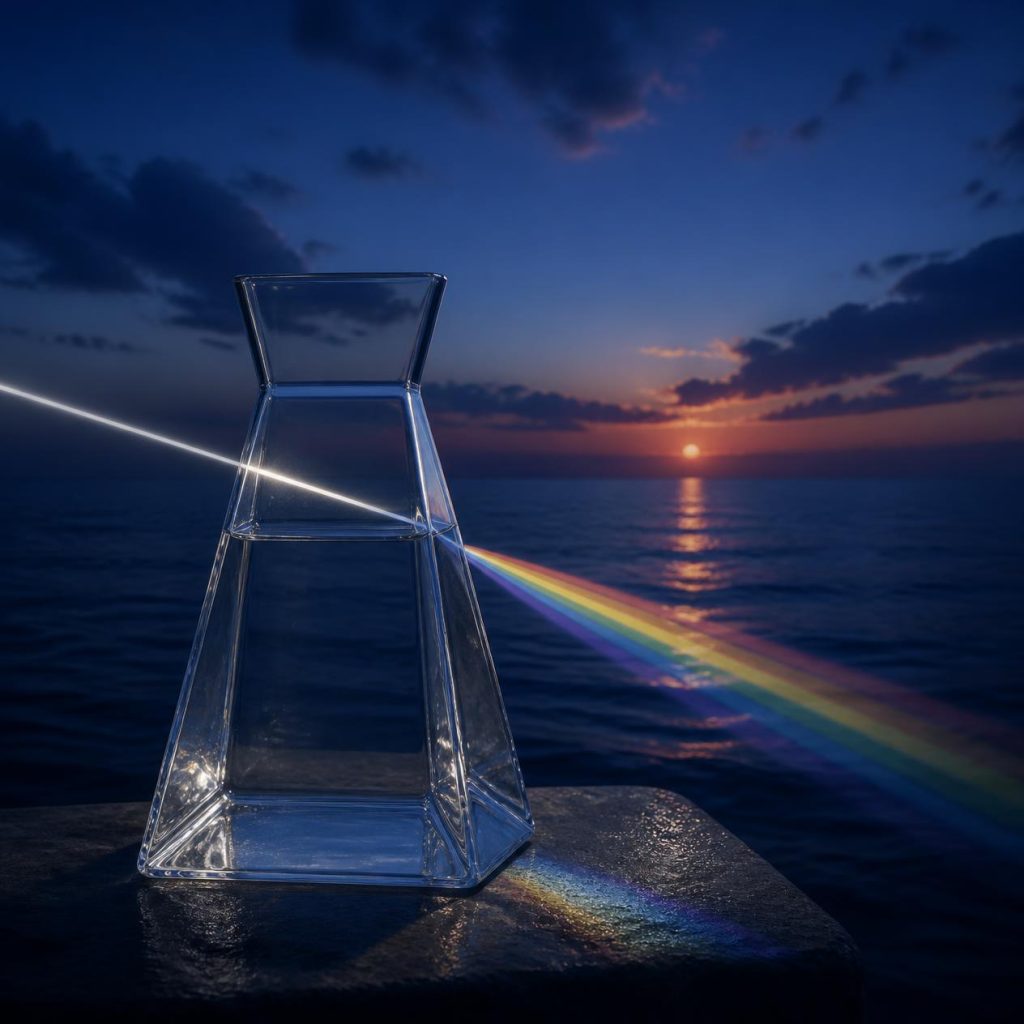
Back in his laboratory in Calcutta, he studied what happens when light passes through different liquids and gases. He discovered something new: when light hits the molecules in a substance, most of it bounces off unchanged — but a small portion of the light changes its color slightly, in a way that depends on exactly what molecule it hit. In other words, when light touches something, it “remembers” the encounter, and carries a tiny trace of it forward.
This discovery, now called the “Raman Effect,” won him the Nobel Prize in Physics in 1930 — the first Nobel Prize in science won by an Asian scientist. Today, “Raman spectroscopy,” the technique built on his discovery, is used everywhere: to identify unknown chemicals, to detect fake medicines, to study art and archaeology without damaging it, and even to help diagnose diseases like cancer.
Why this matters today: Raman’s great gift was not accepting the easy, popular answer just because everyone believed it — he went and checked. And his discovery reminds us that every interaction leaves a trace, even a small, easily missed one. In business and in daily life, the people who notice these small, “shifted” signals — the quiet changes in a conversation, a market, or a relationship — often understand what’s really happening before anyone else does.